

Omni Peptides
Reta GLP3
Couldn't load pickup availability
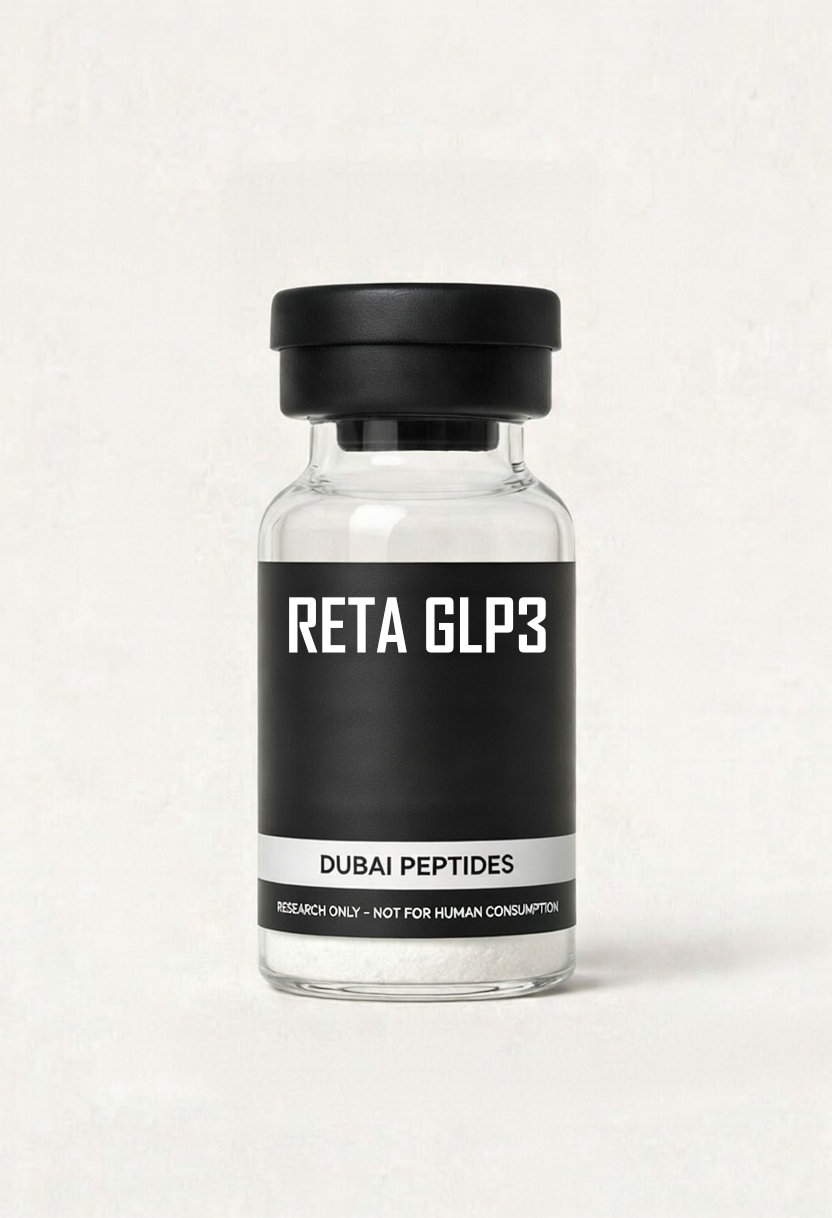
Retatrutide (also known as LY3437943) is a synthetic long-acting peptide engineered as a triple agonist of the glucagon receptor (GCGR), glucose-dependent insulinotropic polypeptide receptor (GIPR), and glucagon-like peptide-1 receptor (GLP-1R). This research compound has generated substantial scientific interest for its potential in modulating energy metabolism, appetite regulation, and glucose homeostasis. Preliminary and advanced preclinical studies, along with emerging clinical data, indicate that retatrutide may induce significant weight reduction, improve glycemic control, enhance lipid profiles, and promote liver fat reduction through synergistic activation of these incretin and glucagon pathways. Researchers employ this peptide in laboratory and animal models to investigate mechanisms of obesity, type 2 diabetes, metabolic dysfunction-associated steatotic liver disease (MASLD), and related metabolic disorders. As a research-grade compound, retatrutide is intended exclusively for in vitro and animal studies. Scientists value its balanced potency profile across the three receptors and its utility in advancing understanding of multi-receptor agonism in metabolic regulation.
Research Applications
-
Obesity and Weight ManagementPreclinical models demonstrate that retatrutide markedly reduces body weight through decreased food intake, delayed gastric emptying, and increased energy expenditure. Studies show superior efficacy compared to dual agonists, with substantial fat mass loss and preservation of lean mass in various obesity models.
-
Glycemic Control and Type 2 DiabetesRetatrutide enhances glucose-dependent insulin secretion, improves insulin sensitivity, and lowers fasting glucose and HbA1c levels in diabetic and prediabetic models. Its triple agonism supports better metabolic outcomes than single or dual incretin therapies.
-
Liver Health and MASLD/MASHInvestigations reveal potent reductions in liver fat content, improvements in steatosis, and modulation of fibrosis markers. Preclinical and early clinical data highlight its role in reversing metabolic dysfunction-associated steatotic liver disease through combined effects on lipid metabolism and inflammation.
-
Lipid Metabolism and Cardiovascular SupportRetatrutide favorably alters lipid profiles by reducing triglycerides, LDL, and VLDL while promoting fat oxidation and ketone body production. Research explores its potential benefits in mitigating obesity-related cardiovascular risk factors.
-
Broader Metabolic and Oncologic ImplicationsEmerging studies suggest protective effects against obesity-associated cancer progression, with reduced tumor growth and immune reprogramming in preclinical tumor models, potentially linked to sustained weight loss and metabolic improvements.
Storage & Handling
Storage & Handling
Lyophilised vials are stable at −20°C for up to 2 years unopened. Once reconstituted, refrigerate at 2–8°C and use within 28 days. Avoid repeated freeze-thaw cycles.
Beyond Use Date
Pre-filled formats (cartridge, pen, nasal) carry a beyond-use date of typically 4–8 weeks from receipt. ≥98% purity by HPLC. For in vitro and preclinical research use only — not for human or veterinary use.