Skip to product information
1 of 1

Omni Peptides

5-Amino-1MQ

Regular price Dhs. 500.00 AED
Regular price Sale price Dhs. 500.00 AED
Sale Sold out
CHOOSE YOUR FORMAT

Size
Quantity
Lyophilised & sealed vials
Independent COA · ≥99% purity
Cold-chain dispatch · same day Dubai
Discreet · unbranded outer packaging

5-Amino-1MQ (also written as 5A1MQ, 5-AM1Q, or 5-Amino-1-methylquinolinium) is a synthetic small-molecule selective inhibitor of nicotinamide N-methyltransferase (NNMT). This research compound has generated significant scientific interest for its ability to modulate cellular NAD⁺ metabolism, energy homeostasis, and adipose/muscle tissue function by blocking NNMT-mediated methylation of nicotinamide. Preliminary and advanced preclinical studies indicate that 5-Amino-1MQ may elevate intracellular NAD⁺ levels, enhance sirtuin activity, promote fatty acid oxidation, support muscle regeneration, and improve metabolic parameters. Researchers utilize this compound in laboratory and animal models to investigate mechanisms of NNMT overexpression in obesity, insulin resistance, sarcopenia, and age-related metabolic decline. As a research-grade compound, 5-Amino-1MQ is intended exclusively for in vitro and animal studies. Scientists value its cell permeability, oral bioavailability in research models, high selectivity for NNMT, and utility in elucidating the role of the NNMT–NAD⁺ axis in metabolic and regenerative biology.

Molecular Formula
C₁₀H₁₁ClN₂
Molecular Weight
194.66 g/mol (chloride salt)
Sequence
5-Amino-1-methylquinolinium chloride (quinolinium core with amino substitution at position 5 and methyl at nitrogen-1; chloride counterion)
01 Metabolic Homeostasis and Fat Oxidation
Preclinical investigations show that NNMT inhibition by 5-Amino-1MQ increases NAD⁺ availability, activates SIRT1, and shifts metabolism toward fatty acid oxidation, resulting in reduced adiposity and improved energy expenditure in diet-induced obesity models.
02 Muscle Regeneration and Sarcopenia
Research demonstrates accelerated skeletal muscle repair, increased muscle stem cell activity, and improved muscle function in aged or injured models, positioning it as a tool for studying age-related muscle decline.
03 Insulin Sensitivity and Glucose Metabolism
Studies indicate improvements in insulin signaling, reduced hepatic glucose output, and enhanced peripheral glucose uptake in models of type 2 diabetes and metabolic syndrome.
04 Mitochondrial Function and Energy Expenditure
5-Amino-1MQ supports mitochondrial biogenesis and oxidative capacity in muscle and other tissues, with potential benefits in models of mitochondrial dysfunction and metabolic inflexibility.
05 Broader Anti-Aging and Tissue Protection
Emerging data explore protective effects against metabolic inflammation, oxidative stress, and fibrosis in liver, adipose, and muscle tissues, including potential relevance to NAFLD/MASLD models.
Storage & Handling

Lyophilised vials are stable at −20°C for up to 2 years unopened. Once reconstituted, refrigerate at 2–8°C and use within 28 days. Avoid repeated freeze-thaw cycles.

Beyond Use Date

Pre-filled formats (cartridge, pen, nasal) carry a beyond-use date of typically 4–8 weeks from receipt. ≥98% purity by HPLC. For in vitro and preclinical research use only — not for human or veterinary use.

Molecular Formula
C₁₀H₁₁ClN₂
Molecular Weight
194.66 g/mol (chloride salt)
Sequence
5-Amino-1-methylquinolinium chloride (quinolinium core with amino substitution at position 5 and methyl at nitrogen-1; chloride counterion)

— About this compound

5-Amino-1MQ is a selective NNMT-inhibiting small molecule.

5-Amino-1MQ (also written as 5A1MQ, 5-AM1Q, or 5-Amino-1-methylquinolinium) is a synthetic small-molecule selective inhibitor of nicotinamide N-methyltransferase (NNMT). This research compound has generated significant scientific interest for its ability to modulate cellular NAD⁺ metabolism, energy homeostasis, and adipose/muscle tissue function by blocking NNMT-mediated methylation of nicotinamide. Preliminary and advanced preclinical studies indicate that 5-Amino-1MQ may elevate intracellular NAD⁺ levels, enhance sirtuin activity, promote fatty acid oxidation, support muscle regeneration, and improve metabolic parameters. Researchers utilize this compound in laboratory and animal models to investigate mechanisms of NNMT overexpression in obesity, insulin resistance, sarcopenia, and age-related metabolic decline. As a research-grade compound, 5-Amino-1MQ is intended exclusively for in vitro and animal studies. Scientists value its cell permeability, oral bioavailability in research models, high selectivity for NNMT, and utility in elucidating the role of the NNMT–NAD⁺ axis in metabolic and regenerative biology.

VIAL ANATOMY
LYOPHILISED VIAL
Flip-off cap
Tamper-evident seal
Rubber stopper
Bacteriostatic-water compatible
Batch-labelled body
Lot & expiry printed
USP Type I glass
Borosilicate, sealed
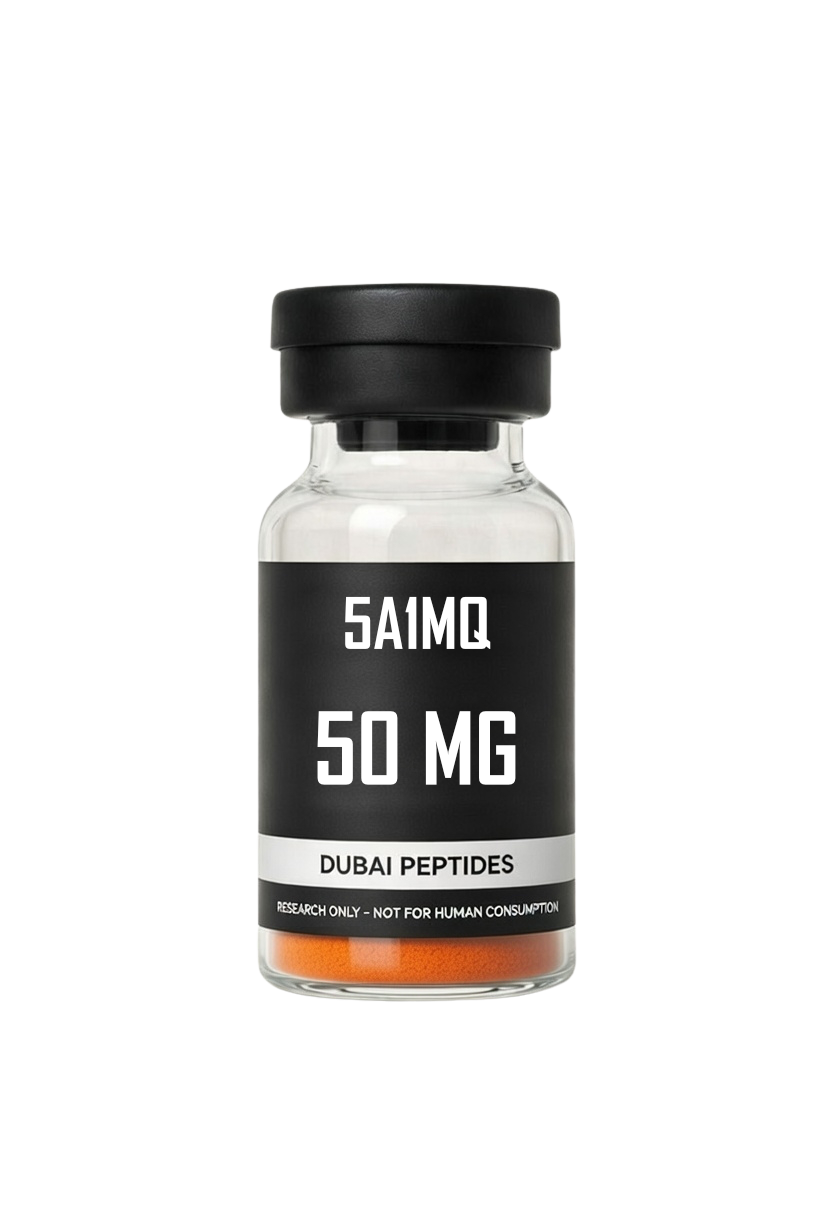
5-Amino-1MQ vial
5-Amino-1MQ
50 MG
DUBAI PEPTIDES
RESEARCH USE ONLY
BLACK RESEARCH SERIES

Research Applications

Where researchers apply it.

01 Metabolic Homeostasis and Fat Oxidation
Preclinical investigations show that NNMT inhibition by 5-Amino-1MQ increases NAD⁺ availability, activates SIRT1, and shifts metabolism toward fatty acid oxidation, resulting in reduced adiposity and improved energy expenditure in diet-induced obesity models.
02 Muscle Regeneration and Sarcopenia
Research demonstrates accelerated skeletal muscle repair, increased muscle stem cell activity, and improved muscle function in aged or injured models, positioning it as a tool for studying age-related muscle decline.
03 Insulin Sensitivity and Glucose Metabolism
Studies indicate improvements in insulin signaling, reduced hepatic glucose output, and enhanced peripheral glucose uptake in models of type 2 diabetes and metabolic syndrome.
04 Mitochondrial Function and Energy Expenditure
5-Amino-1MQ supports mitochondrial biogenesis and oxidative capacity in muscle and other tissues, with potential benefits in models of mitochondrial dysfunction and metabolic inflexibility.
05 Broader Anti-Aging and Tissue Protection
Emerging data explore protective effects against metabolic inflammation, oxidative stress, and fibrosis in liver, adipose, and muscle tissues, including potential relevance to NAFLD/MASLD models.

— Verified & Documented

Every vial is backed by a Certificate of Analysis.

Each lot is independently characterised by HPLC and mass spectrometry, with identity, mass and purity documented per batch and available on request.

Additional quality-control testing, including sterility, endotoxin and heavy metals, is conducted periodically across our product range.

>99%
HPLC Purity
MS
Identity Confirmed
Certificate of Analysis
5-AMINO-1MQ · BATCH 51Q50-0710 · QC RELEASE
PASS
IdentityConfirmed
Mass60.18 mg
Purity>99%
AppearanceWhite Lyophilised
LabJanoshik Analytical (Independant)
Date29/07/26

Storage & Handling

Storage & Handling

Lyophilised vials are stable at −20°C for up to 2 years unopened. Once reconstituted, refrigerate at 2–8°C and use within 28 days. Avoid repeated freeze-thaw cycles.

Beyond Use Date

Pre-filled formats (cartridge, pen, nasal) carry a beyond-use date of typically 4–8 weeks from receipt. ≥98% purity by HPLC. For in vitro and preclinical research use only — not for human or veterinary use.