Skip to product information
1 of 1

Omni Peptides

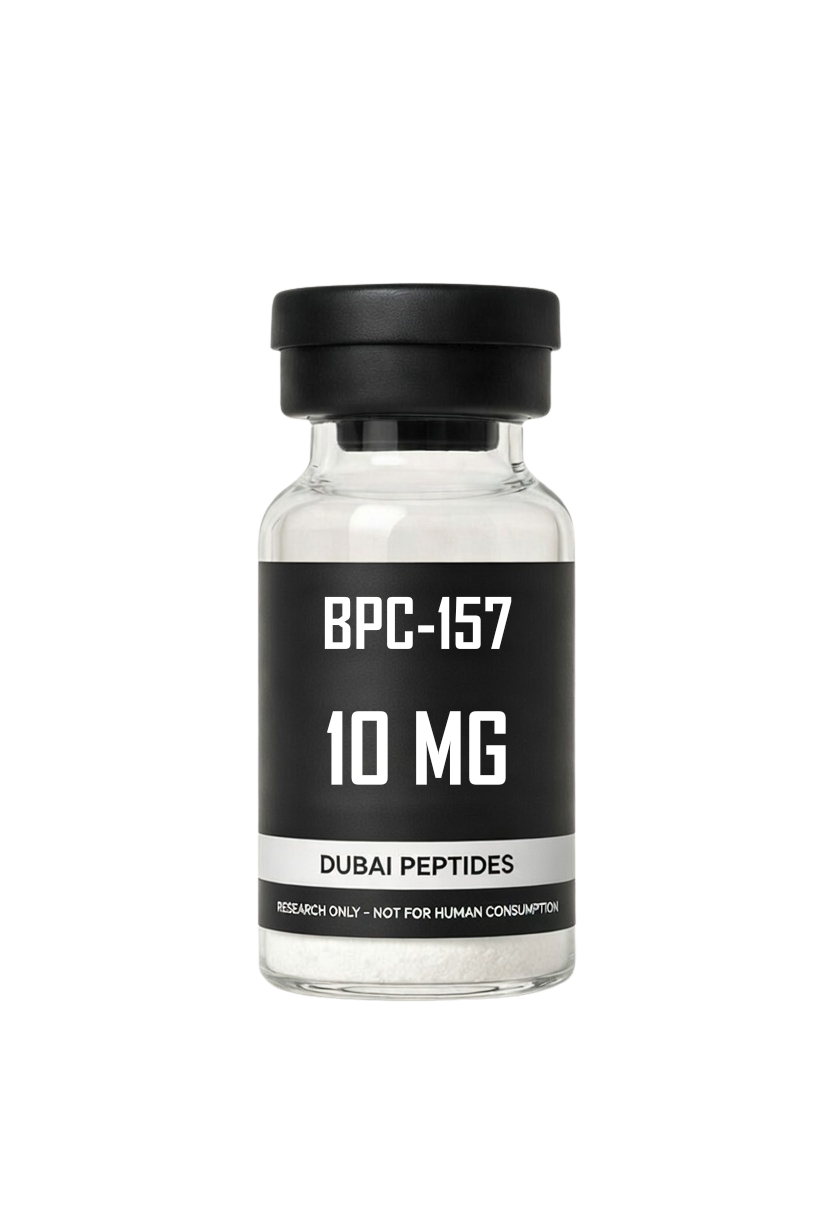
BPC-157

Regular price Dhs. 300.00 AED
Regular price Sale price Dhs. 300.00 AED
Sale Sold out
CHOOSE YOUR FORMAT

Size
Quantity
Lyophilised & sealed vials
Independent COA · ≥99% purity
Cold-chain dispatch · same day Dubai
Discreet · unbranded outer packaging

Tendon/ligament, gut healing, inflammation reduction

BPC-157 is a synthetic pentadecapeptide derived from a protective protein complex (Body Protection Compound) found in human gastric juice. This research compound has attracted extensive scientific interest for its pleiotropic effects in tissue protection, regeneration, and cytoprotection across diverse preclinical models. Preliminary studies indicate that BPC-157 may promote angiogenesis, modulate growth factor expression, enhance extracellular matrix remodeling, and exert robust anti-inflammatory and neuroprotective actions. Researchers utilize this peptide in laboratory settings to investigate mechanisms of injury repair, particularly in gastrointestinal, musculoskeletal, vascular, and central nervous system models. As a research-grade compound, BPC-157 is intended exclusively for in vitro and animal studies. Scientists value its remarkable stability in harsh environments (including gastric juice) and its potential to advance understanding of endogenous protective pathways in regenerative medicine.

Molecular Formula
C₆₂H₉₈N₁₆O₂₂
Molecular Weight
1419.5 g/mol
Sequence
Gly-Glu-Pro-Pro-Pro-Gly-Lys-Pro-Ala-Asp-Asp-Ala-Gly-Leu-Val
01 Musculoskeletal Regeneration
Extensive preclinical research demonstrates that BPC-157 significantly accelerates healing of muscles, tendons, ligaments, and bones. It improves biomechanical strength, structural integrity, and recovery even in avascular or poorly vascularized tissues, including models of tendon rupture, ligament transection, and muscle crush injuries.
02 Gastrointestinal Health
As a gastric-derived peptide, BPC-157 exhibits exceptional cytoprotective effects on the gut mucosa. Studies have explored its efficacy in counteracting ulcers, inflammatory bowel disease models, fistulas, and damage from stressors, toxins, or ischemia, while preserving epithelial integrity.
03 Angiogenesis and Vascular Protection
BPC-157 promotes new blood vessel formation and collateral vessel pathways via nitric oxide modulation and growth factor activation. This mechanism supports nutrient delivery and tissue survival in ischemic, occluded, or damaged vascular models.
04 Neuroprotective and CNS Support
Investigations highlight its ability to counteract damage in traumatic brain injury, spinal cord compression, and peripheral nerve transection models. It influences neurotransmitter balance (including serotonergic and dopaminergic systems) and offers protection against neurotoxic insults.
05 Anti-Inflammatory and Systemic Protection
It reduces pro-inflammatory mediators, mitigates oxidative stress, and promotes resolution of inflammation across multiple organ systems, including liver, pancreas, heart, and cornea.
Storage & Handling

Lyophilised vials are stable at −20°C for up to 2 years unopened. Once reconstituted, refrigerate at 2–8°C and use within 28 days. Avoid repeated freeze-thaw cycles.

Beyond Use Date

Pre-filled formats (cartridge, pen, nasal) carry a beyond-use date of typically 4–8 weeks from receipt. ≥98% purity by HPLC. For in vitro and preclinical research use only — not for human or veterinary use.

Molecular Formula
C₆₂H₉₈N₁₆O₂₂
Molecular Weight
1419.5 g/mol
Sequence
Gly-Glu-Pro-Pro-Pro-Gly-Lys-Pro-Ala-Asp-Asp-Ala-Gly-Leu-Val

— About this compound

BPC-157 is a synthetic pentadecapeptide.

BPC-157 is a synthetic pentadecapeptide derived from a protective protein complex (Body Protection Compound) found in human gastric juice. This research compound has attracted extensive scientific interest for its pleiotropic effects in tissue protection, regeneration, and cytoprotection across diverse preclinical models. Preliminary studies indicate that BPC-157 may promote angiogenesis, modulate growth factor expression, enhance extracellular matrix remodeling, and exert robust anti-inflammatory and neuroprotective actions. Researchers utilize this peptide in laboratory settings to investigate mechanisms of injury repair, particularly in gastrointestinal, musculoskeletal, vascular, and central nervous system models. As a research-grade compound, BPC-157 is intended exclusively for in vitro and animal studies. Scientists value its remarkable stability in harsh environments (including gastric juice) and its potential to advance understanding of endogenous protective pathways in regenerative medicine.

VIAL ANATOMY
LYOPHILISED VIAL
Flip-off cap
Tamper-evident seal
Rubber stopper
Bacteriostatic-water compatible
Batch-labelled body
Lot & expiry printed
USP Type I glass
Borosilicate, sealed
BPC-157 vial
BPC-157
10mg
DUBAI PEPTIDES
RESEARCH USE ONLY
BLACK RESEARCH SERIES

Research Applications

Where researchers apply it.

01 Musculoskeletal Regeneration
Extensive preclinical research demonstrates that BPC-157 significantly accelerates healing of muscles, tendons, ligaments, and bones. It improves biomechanical strength, structural integrity, and recovery even in avascular or poorly vascularized tissues, including models of tendon rupture, ligament transection, and muscle crush injuries.
02 Gastrointestinal Health
As a gastric-derived peptide, BPC-157 exhibits exceptional cytoprotective effects on the gut mucosa. Studies have explored its efficacy in counteracting ulcers, inflammatory bowel disease models, fistulas, and damage from stressors, toxins, or ischemia, while preserving epithelial integrity.
03 Angiogenesis and Vascular Protection
BPC-157 promotes new blood vessel formation and collateral vessel pathways via nitric oxide modulation and growth factor activation. This mechanism supports nutrient delivery and tissue survival in ischemic, occluded, or damaged vascular models.
04 Neuroprotective and CNS Support
Investigations highlight its ability to counteract damage in traumatic brain injury, spinal cord compression, and peripheral nerve transection models. It influences neurotransmitter balance (including serotonergic and dopaminergic systems) and offers protection against neurotoxic insults.
05 Anti-Inflammatory and Systemic Protection
It reduces pro-inflammatory mediators, mitigates oxidative stress, and promotes resolution of inflammation across multiple organ systems, including liver, pancreas, heart, and cornea.

— Verified & Documented

Every vial is backed by a Certificate of Analysis.

Each lot is independently characterised by HPLC and mass spectrometry, with identity, mass and purity documented per batch and available on request.

Additional quality-control testing, including sterility, endotoxin and heavy metals, is conducted periodically across our product range.

>99%
HPLC Purity
MS
Identity Confirmed
Certificate of Analysis
BPC-157 · BATCH BP10-0415 · QC RELEASE
PASS
IdentityConfirmed
Mass11.87 mg
Purity99.359%
AppearanceWhite Lyophilised
LabJanoshik Analytical (Independant)
Date30/04/26

Storage & Handling

Storage & Handling

Lyophilised vials are stable at −20°C for up to 2 years unopened. Once reconstituted, refrigerate at 2–8°C and use within 28 days. Avoid repeated freeze-thaw cycles.

Beyond Use Date

Pre-filled formats (cartridge, pen, nasal) carry a beyond-use date of typically 4–8 weeks from receipt. ≥98% purity by HPLC. For in vitro and preclinical research use only — not for human or veterinary use.