

Omni Peptides
Cartalax
Couldn't load pickup availability
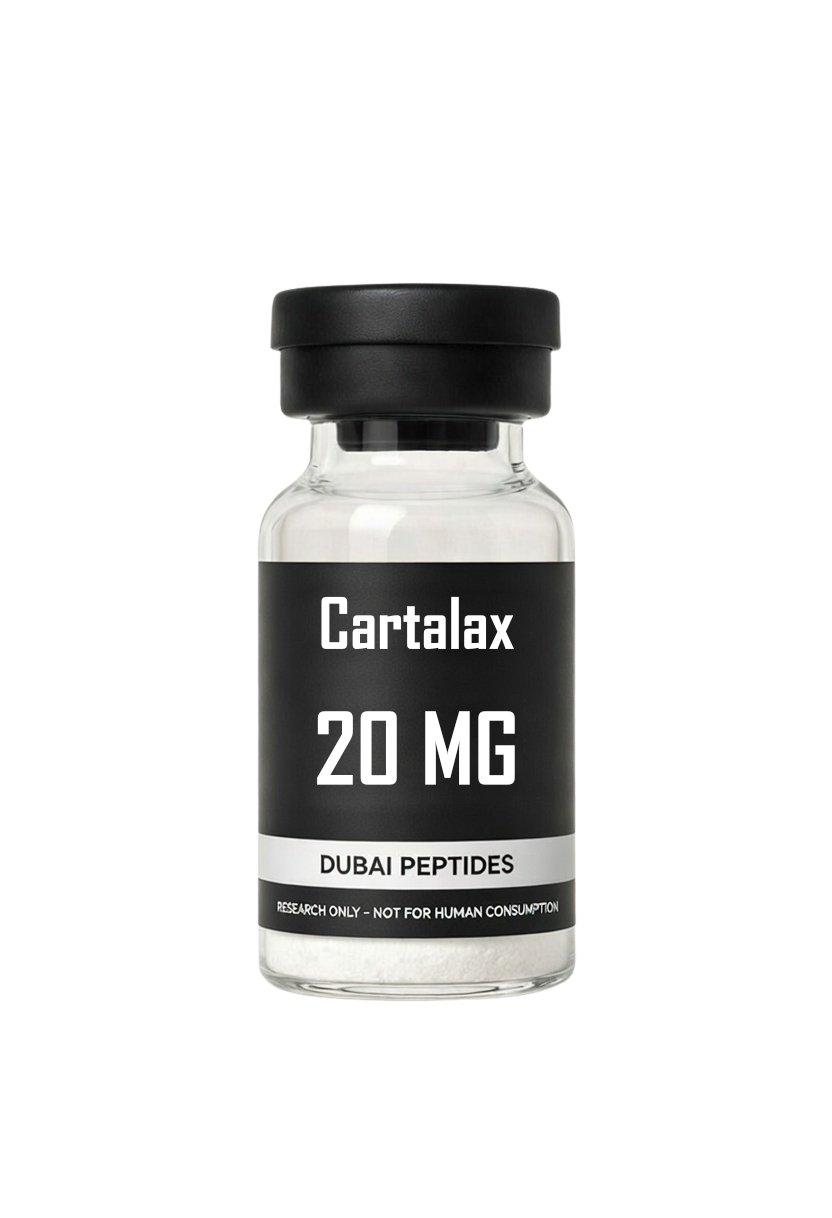
Cartalax (also known as AED peptide or Cartalax bioregulator) is a synthetic tripeptide with the sequence Ala-Glu-Asp, developed as a tissue-specific peptide bioregulator within the cytogen/bioregulator peptide class pioneered by Russian researchers. This research compound has attracted scientific interest for its potential chondroprotective, regenerative, and anti-aging effects on cartilage and connective tissues. Preliminary preclinical studies suggest that Cartalax may normalize gene expression in chondrocytes, support extracellular matrix synthesis, reduce age-related degenerative changes in joint tissues, and promote tissue homeostasis. Researchers utilize Cartalax in laboratory and animal models to investigate mechanisms of cartilage repair, osteoarthritis-like conditions, joint aging, and short-peptide regulation of connective tissue. As a research-grade compound, Cartalax is intended exclusively for in vitro and animal studies. Scientists value its low molecular weight, high tissue specificity for cartilage, and utility in studying peptide-mediated epigenetic and transcriptional control in musculoskeletal tissues.
Research Applications
Storage & Handling
Storage & Handling
Lyophilised vials are stable at −20°C for up to 2 years unopened. Once reconstituted, refrigerate at 2–8°C and use within 28 days. Avoid repeated freeze-thaw cycles.
Beyond Use Date
Pre-filled formats (cartridge, pen, nasal) carry a beyond-use date of typically 4–8 weeks from receipt. ≥98% purity by HPLC. For in vitro and preclinical research use only — not for human or veterinary use.
— About this compound
Cartalax is a synthetic tripeptide.
Cartalax (also known as AED peptide or Cartalax bioregulator) is a synthetic tripeptide with the sequence Ala-Glu-Asp, developed as a tissue-specific peptide bioregulator within the cytogen/bioregulator peptide class pioneered by Russian researchers. This research compound has attracted scientific interest for its potential chondroprotective, regenerative, and anti-aging effects on cartilage and connective tissues. Preliminary preclinical studies suggest that Cartalax may normalize gene expression in chondrocytes, support extracellular matrix synthesis, reduce age-related degenerative changes in joint tissues, and promote tissue homeostasis. Researchers utilize Cartalax in laboratory and animal models to investigate mechanisms of cartilage repair, osteoarthritis-like conditions, joint aging, and short-peptide regulation of connective tissue. As a research-grade compound, Cartalax is intended exclusively for in vitro and animal studies. Scientists value its low molecular weight, high tissue specificity for cartilage, and utility in studying peptide-mediated epigenetic and transcriptional control in musculoskeletal tissues.

Research Applications
Where researchers apply it.
— Verified & Documented
Every vial is backed by a Certificate of Analysis.
Each lot is independently characterised by HPLC and mass spectrometry, with identity, mass and purity documented per batch and available on request.
Additional quality-control testing, including sterility, endotoxin and heavy metals, is conducted periodically across our product range.
Storage & Handling
Storage & Handling
Lyophilised vials are stable at −20°C for up to 2 years unopened. Once reconstituted, refrigerate at 2–8°C and use within 28 days. Avoid repeated freeze-thaw cycles.
Beyond Use Date
Pre-filled formats (cartridge, pen, nasal) carry a beyond-use date of typically 4–8 weeks from receipt. ≥98% purity by HPLC. For in vitro and preclinical research use only — not for human or veterinary use.