

Omni Peptides
CJC-1295 (Mod GRF 1-29)
Couldn't load pickup availability

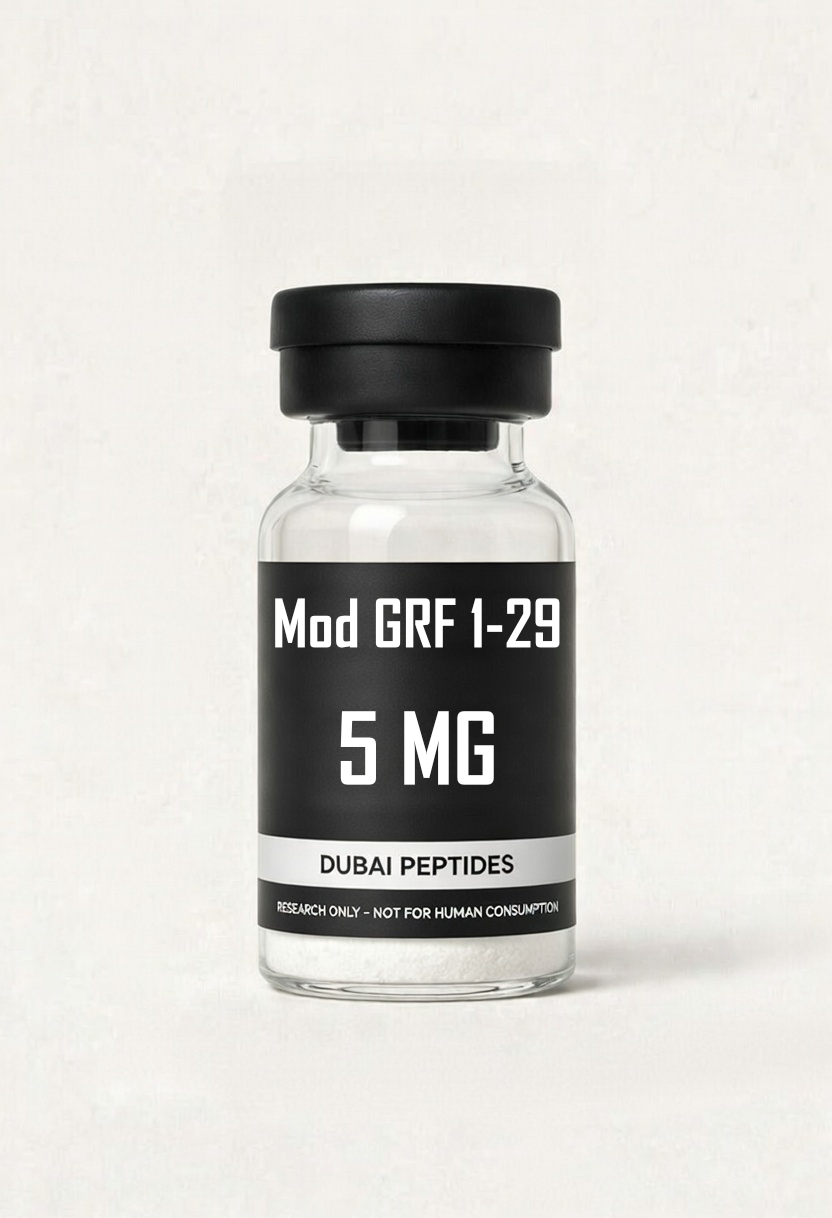
CJC-1295 No DAC (also known as Mod GRF (1-29) or tetrasubstituted GRF (1-29)) is a synthetic 29-amino-acid polypeptide analog of growth hormone-releasing hormone (GHRH), featuring four strategic amino acid substitutions (at positions 2, 8, 15, and 27) designed to dramatically enhance stability and resistance to enzymatic degradation compared to native GHRH. Unlike the DAC-containing version, CJC-1295 No DAC has a short half-life (approximately 6–8 minutes), resulting in more physiological, pulsatile stimulation of endogenous growth hormone (GH) secretion. This research compound has attracted significant scientific interest for its potent and selective activation of pituitary somatotropes. Preliminary and advanced preclinical studies indicate that CJC-1295 No DAC may robustly increase GH and IGF-1 levels in a natural pulsatile pattern, support anabolic processes, enhance recovery, and promote favorable changes in body composition. Researchers utilize this peptide in laboratory and animal models to investigate mechanisms of GH axis physiology, pulsatile hormone release, tissue repair, and age-related endocrine modulation. As a research-grade compound, CJC-1295 No DAC is intended exclusively for in vitro and animal studies. Scientists value its clean pharmacokinetic profile, minimal off-target hormonal effects, and utility in studying natural GH pulsatility versus sustained release patterns.
Research Applications
Storage & Handling
Storage & Handling
Lyophilised vials are stable at −20°C for up to 2 years unopened. Once reconstituted, refrigerate at 2–8°C and use within 28 days. Avoid repeated freeze-thaw cycles.
Beyond Use Date
Pre-filled formats (cartridge, pen, nasal) carry a beyond-use date of typically 4–8 weeks from receipt. ≥98% purity by HPLC. For in vitro and preclinical research use only — not for human or veterinary use.
— About this compound
CJC-1295 (Mod GRF 1-29) is a synthetic growth-hormone-releasing peptide.
CJC-1295 No DAC (also known as Mod GRF (1-29) or tetrasubstituted GRF (1-29)) is a synthetic 29-amino-acid polypeptide analog of growth hormone-releasing hormone (GHRH), featuring four strategic amino acid substitutions (at positions 2, 8, 15, and 27) designed to dramatically enhance stability and resistance to enzymatic degradation compared to native GHRH. Unlike the DAC-containing version, CJC-1295 No DAC has a short half-life (approximately 6–8 minutes), resulting in more physiological, pulsatile stimulation of endogenous growth hormone (GH) secretion. This research compound has attracted significant scientific interest for its potent and selective activation of pituitary somatotropes. Preliminary and advanced preclinical studies indicate that CJC-1295 No DAC may robustly increase GH and IGF-1 levels in a natural pulsatile pattern, support anabolic processes, enhance recovery, and promote favorable changes in body composition. Researchers utilize this peptide in laboratory and animal models to investigate mechanisms of GH axis physiology, pulsatile hormone release, tissue repair, and age-related endocrine modulation. As a research-grade compound, CJC-1295 No DAC is intended exclusively for in vitro and animal studies. Scientists value its clean pharmacokinetic profile, minimal off-target hormonal effects, and utility in studying natural GH pulsatility versus sustained release patterns.

Research Applications
Where researchers apply it.
— Verified & Documented
Every vial is backed by a Certificate of Analysis.
Each lot is independently characterised by HPLC and mass spectrometry, with identity, mass and purity documented per batch and available on request.
Additional quality-control testing, including sterility, endotoxin and heavy metals, is conducted periodically across our product range.
Storage & Handling
Storage & Handling
Lyophilised vials are stable at −20°C for up to 2 years unopened. Once reconstituted, refrigerate at 2–8°C and use within 28 days. Avoid repeated freeze-thaw cycles.
Beyond Use Date
Pre-filled formats (cartridge, pen, nasal) carry a beyond-use date of typically 4–8 weeks from receipt. ≥98% purity by HPLC. For in vitro and preclinical research use only — not for human or veterinary use.