

Omni Peptides
Melanotan I
Couldn't load pickup availability
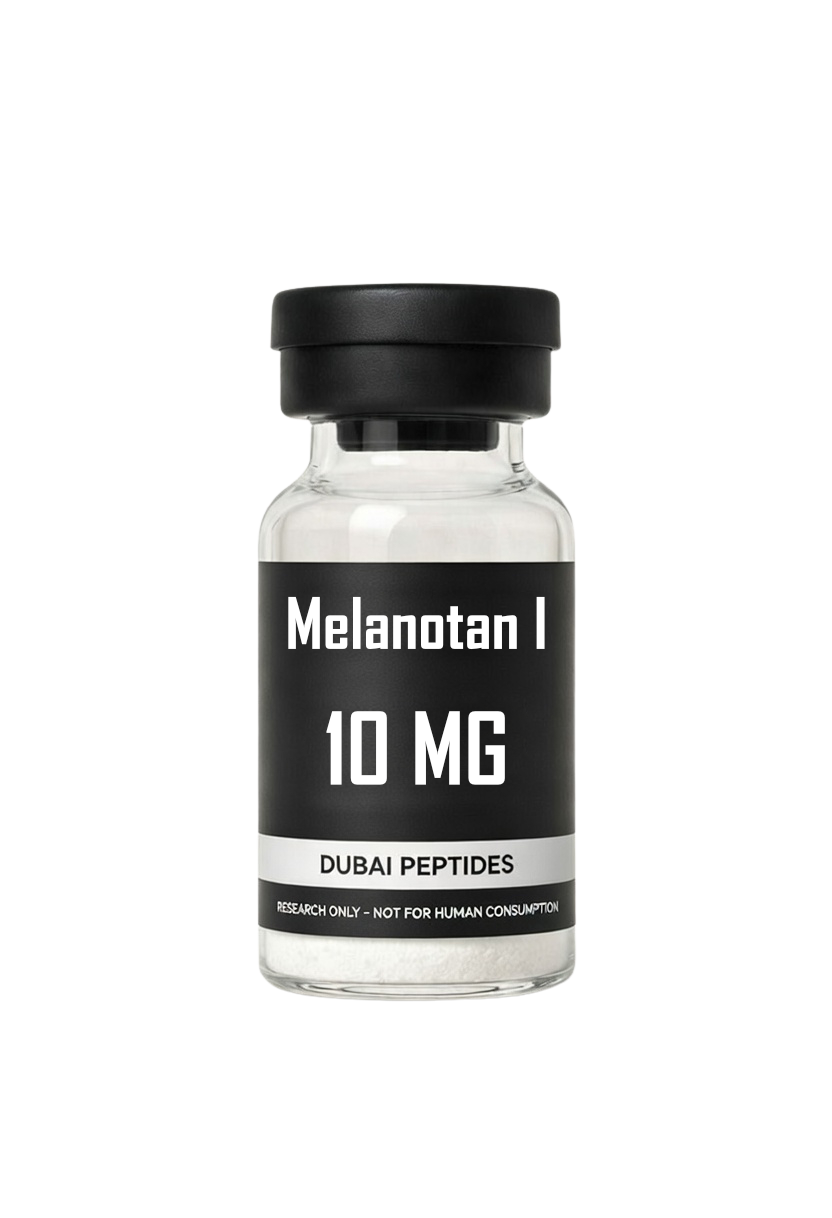
Melanotan I (also known as Melanotan-1, Afamelanotide, or [Nle⁴, D-Phe⁷]-α-MSH) is a synthetic linear tridecapeptide analog of alpha-melanocyte-stimulating hormone (α-MSH). This research compound was designed for selective agonism at the melanocortin-1 receptor (MC1R) with improved potency and enzymatic stability compared to native α-MSH. It has attracted significant scientific interest for its potent stimulation of eumelanin synthesis, photoprotection, and potential tissue-protective effects without the strong central melanocortin activity (MC3R/MC4R) that characterizes Melanotan II.
Preliminary and advanced preclinical studies indicate that Melanotan I robustly activates melanocytes to increase melanin production, enhances UV resistance, and may exert anti-inflammatory and cytoprotective actions. Researchers utilize this peptide in laboratory and animal models to investigate mechanisms of melanogenesis, photobiology, skin pigmentation disorders, and melanocortin receptor signaling. As a research-grade compound, Melanotan I is intended exclusively for in vitro and animal studies (note: afamelanotide has received regulatory approval in certain jurisdictions for erythropoietic protoporphyria under the brand Scenesse, but research formulations remain designated for laboratory use). Scientists value its higher MC1R selectivity relative to Melanotan II, linear structure, and utility in studying targeted pigmentation pathways with reduced off-target central effects.
Research Applications
Storage & Handling
Storage & Handling
Lyophilised vials are stable at −20°C for up to 2 years unopened. Once reconstituted, refrigerate at 2–8°C and use within 28 days. Avoid repeated freeze-thaw cycles.
Beyond Use Date
Pre-filled formats (cartridge, pen, nasal) carry a beyond-use date of typically 4–8 weeks from receipt. ≥98% purity by HPLC. For in vitro and preclinical research use only — not for human or veterinary use.
— About this compound
Melanotan I is a synthetic α-MSH tridecapeptide analogue.
Melanotan I (also known as Melanotan-1, Afamelanotide, or [Nle⁴, D-Phe⁷]-α-MSH) is a synthetic linear tridecapeptide analog of alpha-melanocyte-stimulating hormone (α-MSH). This research compound was designed for selective agonism at the melanocortin-1 receptor (MC1R) with improved potency and enzymatic stability compared to native α-MSH. It has attracted significant scientific interest for its potent stimulation of eumelanin synthesis, photoprotection, and potential tissue-protective effects without the strong central melanocortin activity (MC3R/MC4R) that characterizes Melanotan II.
Preliminary and advanced preclinical studies indicate that Melanotan I robustly activates melanocytes to increase melanin production, enhances UV resistance, and may exert anti-inflammatory and cytoprotective actions. Researchers utilize this peptide in laboratory and animal models to investigate mechanisms of melanogenesis, photobiology, skin pigmentation disorders, and melanocortin receptor signaling. As a research-grade compound, Melanotan I is intended exclusively for in vitro and animal studies (note: afamelanotide has received regulatory approval in certain jurisdictions for erythropoietic protoporphyria under the brand Scenesse, but research formulations remain designated for laboratory use). Scientists value its higher MC1R selectivity relative to Melanotan II, linear structure, and utility in studying targeted pigmentation pathways with reduced off-target central effects.

Research Applications
Where researchers apply it.
— Verified & Documented
Every vial is backed by a Certificate of Analysis.
Each lot is independently characterised by HPLC and mass spectrometry, with identity, mass and purity documented per batch and available on request.
Additional quality-control testing, including sterility, endotoxin and heavy metals, is conducted periodically across our product range.
Storage & Handling
Storage & Handling
Lyophilised vials are stable at −20°C for up to 2 years unopened. Once reconstituted, refrigerate at 2–8°C and use within 28 days. Avoid repeated freeze-thaw cycles.
Beyond Use Date
Pre-filled formats (cartridge, pen, nasal) carry a beyond-use date of typically 4–8 weeks from receipt. ≥98% purity by HPLC. For in vitro and preclinical research use only — not for human or veterinary use.