

Omni Peptides
MOTS-c
Couldn't load pickup availability
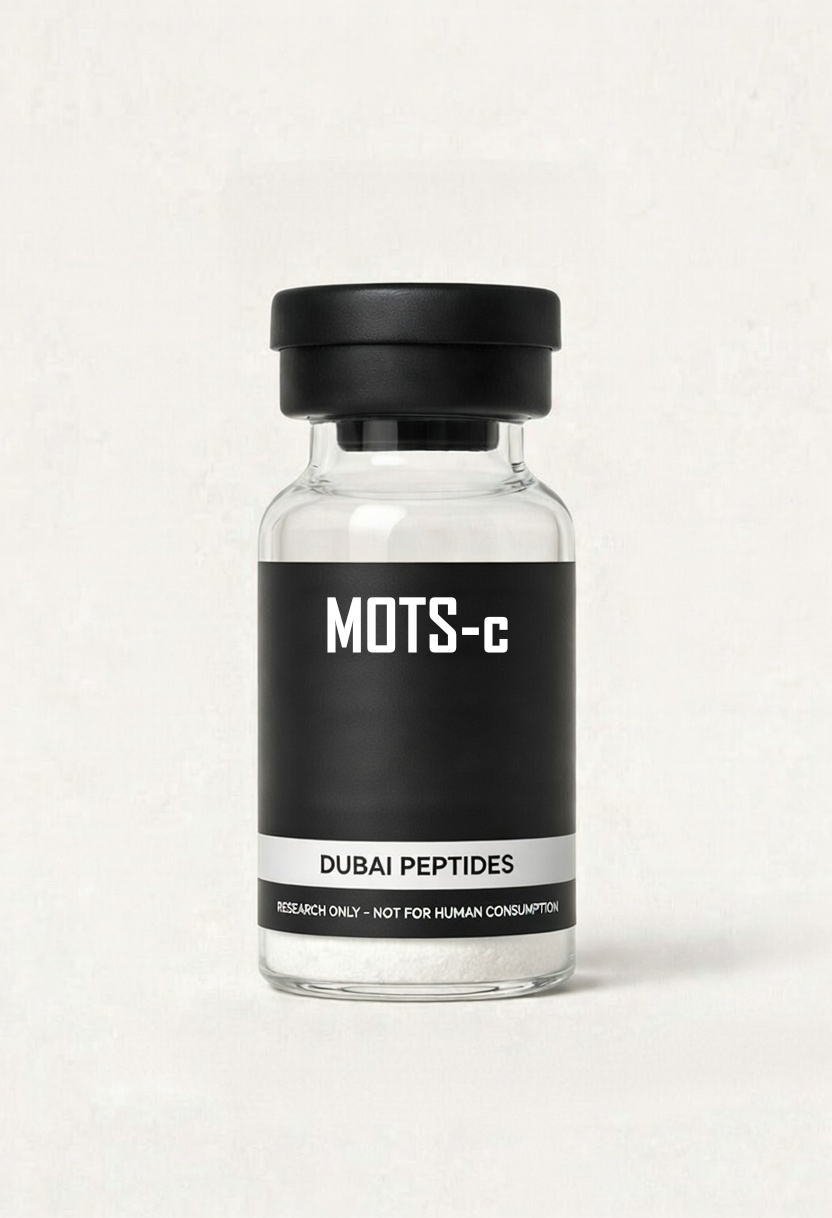
Clean GH boost, recovery, fat metabolism
MOTS-c (Mitochondrial Open Reading Frame of the 12S rRNA type-c) is a synthetic version of the naturally occurring 16-amino-acid mitochondrial-derived peptide (MDP) encoded by a short open reading frame within the mitochondrial 12S rRNA gene (MT-RNR1). This research compound has attracted significant scientific interest for its role as a metabolic regulator and exercise mimetic. Preliminary and advanced preclinical studies indicate that MOTS-c may activate AMP-activated protein kinase (AMPK), enhance glucose uptake in skeletal muscle, promote metabolic flexibility, reduce insulin resistance, and support mitochondrial biogenesis. Researchers utilize this peptide in laboratory and animal models to explore mechanisms of energy homeostasis, particularly in models of obesity, type 2 diabetes, aging, and exercise physiology. As a research-grade compound, MOTS-c is intended exclusively for in vitro and animal studies. Scientists value its unique mitochondrial origin, systemic hormonal-like actions, and potential to elucidate mitochondrial-nuclear communication in metabolic health.
Research Applications
Storage & Handling
Storage & Handling
Lyophilised vials are stable at −20°C for up to 2 years unopened. Once reconstituted, refrigerate at 2–8°C and use within 28 days. Avoid repeated freeze-thaw cycles.
Beyond Use Date
Pre-filled formats (cartridge, pen, nasal) carry a beyond-use date of typically 4–8 weeks from receipt. ≥98% purity by HPLC. For in vitro and preclinical research use only — not for human or veterinary use.
— About this compound
MOTS-c is a mitochondrial-derived peptide.
MOTS-c (Mitochondrial Open Reading Frame of the 12S rRNA type-c) is a synthetic version of the naturally occurring 16-amino-acid mitochondrial-derived peptide (MDP) encoded by a short open reading frame within the mitochondrial 12S rRNA gene (MT-RNR1). This research compound has attracted significant scientific interest for its role as a metabolic regulator and exercise mimetic. Preliminary and advanced preclinical studies indicate that MOTS-c may activate AMP-activated protein kinase (AMPK), enhance glucose uptake in skeletal muscle, promote metabolic flexibility, reduce insulin resistance, and support mitochondrial biogenesis. Researchers utilize this peptide in laboratory and animal models to explore mechanisms of energy homeostasis, particularly in models of obesity, type 2 diabetes, aging, and exercise physiology. As a research-grade compound, MOTS-c is intended exclusively for in vitro and animal studies. Scientists value its unique mitochondrial origin, systemic hormonal-like actions, and potential to elucidate mitochondrial-nuclear communication in metabolic health.

Research Applications
Where researchers apply it.
— Verified & Documented
Every vial is backed by a Certificate of Analysis.
Each lot is independently characterised by HPLC and mass spectrometry, with identity, mass and purity documented per batch and available on request.
Additional quality-control testing, including sterility, endotoxin and heavy metals, is conducted periodically across our product range.
Storage & Handling
Storage & Handling
Lyophilised vials are stable at −20°C for up to 2 years unopened. Once reconstituted, refrigerate at 2–8°C and use within 28 days. Avoid repeated freeze-thaw cycles.
Beyond Use Date
Pre-filled formats (cartridge, pen, nasal) carry a beyond-use date of typically 4–8 weeks from receipt. ≥98% purity by HPLC. For in vitro and preclinical research use only — not for human or veterinary use.