

Omni Peptides
Oxytocin
Couldn't load pickup availability
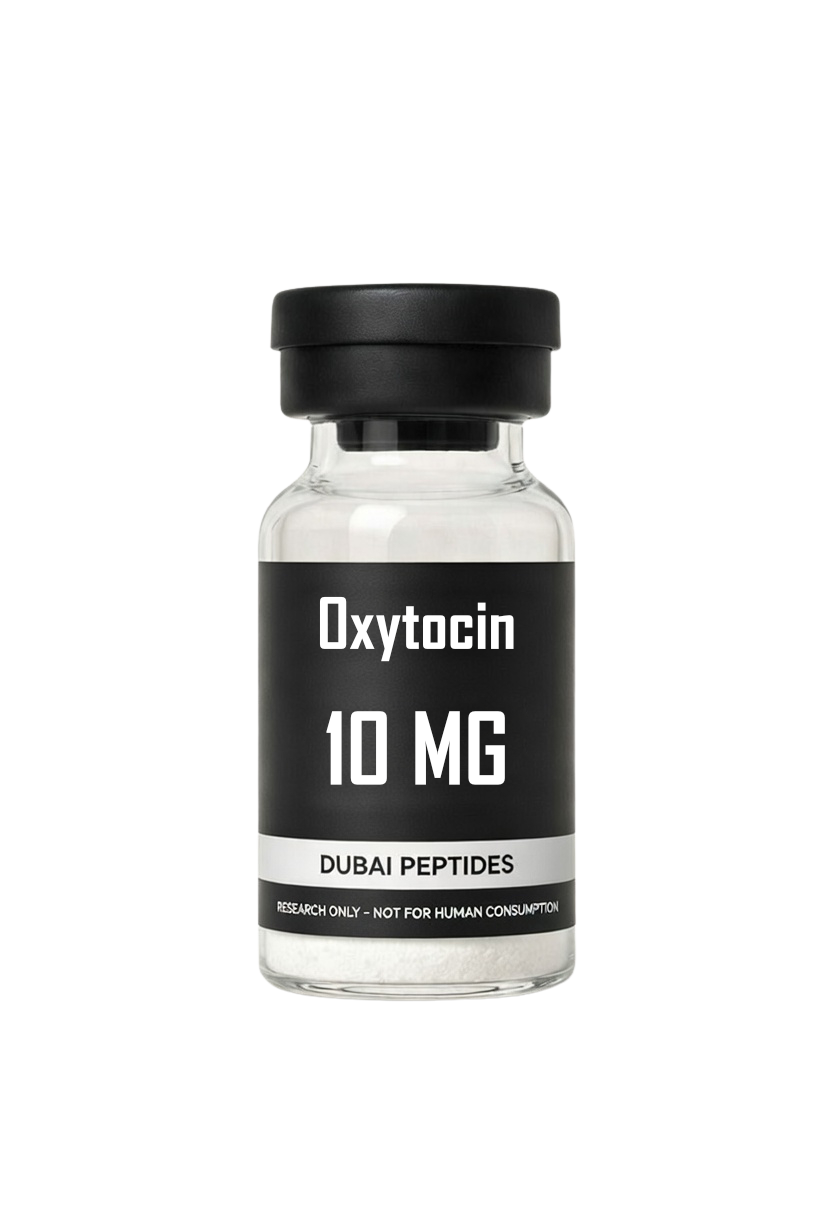
Oxytocin is a naturally occurring nonapeptide hormone synthesized primarily in the supraoptic and paraventricular nuclei of the hypothalamus and released from the posterior pituitary. The synthetic form used in research is identical in structure to the endogenous peptide. This research compound has attracted extensive scientific interest for its roles in social behavior, reproduction, stress modulation, and neuroendocrine regulation. Preliminary and advanced preclinical studies indicate that oxytocin may facilitate pair bonding, reduce anxiety-like behaviors, promote uterine and mammary smooth muscle contraction, influence trust and affiliation, and exert cardioprotective and anti-inflammatory effects. Researchers utilize oxytocin in laboratory and animal models to investigate mechanisms of social cognition, maternal behavior, stress resilience, parturition, lactation, and central oxytocin receptor signaling. As a research-grade compound, oxytocin is intended exclusively for in vitro and animal studies. Scientists value its well-characterized receptor (OXTR), short half-life, and utility in elucidating the oxytocinergic system across behavioral, reproductive, and metabolic research domains.
Research Applications
Storage & Handling
Storage & Handling
Lyophilised vials are stable at −20°C for up to 2 years unopened. Once reconstituted, refrigerate at 2–8°C and use within 28 days. Avoid repeated freeze-thaw cycles.
Beyond Use Date
Pre-filled formats (cartridge, pen, nasal) carry a beyond-use date of typically 4–8 weeks from receipt. ≥98% purity by HPLC. For in vitro and preclinical research use only — not for human or veterinary use.
— About this compound
Oxytocin is a synthetic cyclic nonapeptide.
Oxytocin is a naturally occurring nonapeptide hormone synthesized primarily in the supraoptic and paraventricular nuclei of the hypothalamus and released from the posterior pituitary. The synthetic form used in research is identical in structure to the endogenous peptide. This research compound has attracted extensive scientific interest for its roles in social behavior, reproduction, stress modulation, and neuroendocrine regulation. Preliminary and advanced preclinical studies indicate that oxytocin may facilitate pair bonding, reduce anxiety-like behaviors, promote uterine and mammary smooth muscle contraction, influence trust and affiliation, and exert cardioprotective and anti-inflammatory effects. Researchers utilize oxytocin in laboratory and animal models to investigate mechanisms of social cognition, maternal behavior, stress resilience, parturition, lactation, and central oxytocin receptor signaling. As a research-grade compound, oxytocin is intended exclusively for in vitro and animal studies. Scientists value its well-characterized receptor (OXTR), short half-life, and utility in elucidating the oxytocinergic system across behavioral, reproductive, and metabolic research domains.

Research Applications
Where researchers apply it.
— Verified & Documented
Every vial is backed by a Certificate of Analysis.
Each lot is independently characterised by HPLC and mass spectrometry, with identity, mass and purity documented per batch and available on request.
Additional quality-control testing, including sterility, endotoxin and heavy metals, is conducted periodically across our product range.
Storage & Handling
Storage & Handling
Lyophilised vials are stable at −20°C for up to 2 years unopened. Once reconstituted, refrigerate at 2–8°C and use within 28 days. Avoid repeated freeze-thaw cycles.
Beyond Use Date
Pre-filled formats (cartridge, pen, nasal) carry a beyond-use date of typically 4–8 weeks from receipt. ≥98% purity by HPLC. For in vitro and preclinical research use only — not for human or veterinary use.