

Omni Peptides
P-21
Couldn't load pickup availability
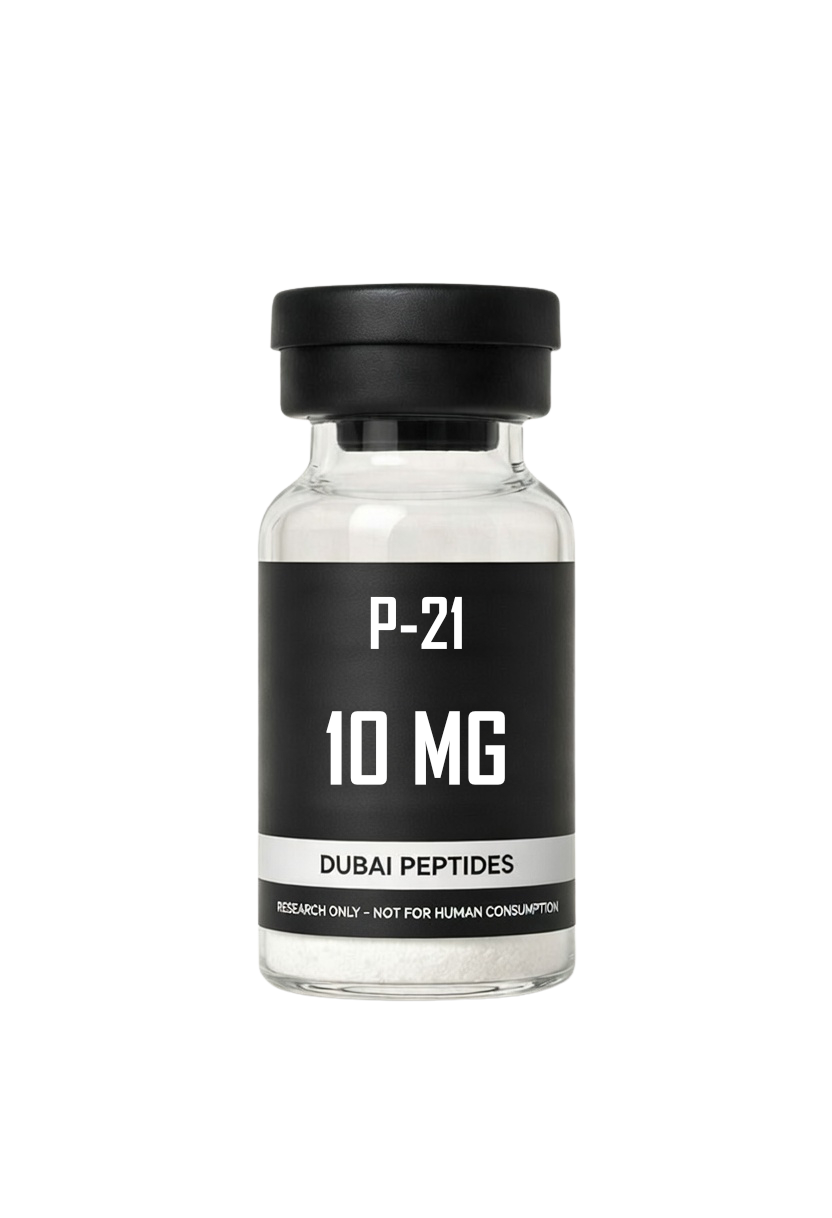
P-21 (also known as P021, Peptide 021, or GLXC-21260) is a synthetic adamantane-modified tetrapeptide derived from a biologically active region (residues 148–151) of ciliary neurotrophic factor (CNTF). This research compound was rationally designed to capture the neurotrophic and neurogenic properties of full-length CNTF while overcoming its limitations (poor blood-brain barrier penetration, short half-life, and side effects such as anorexia and weight loss). The addition of an adamantylated glycine at the C-terminus enhances lipophilicity, metabolic stability, and CNS accessibility, enabling oral administration in research models.
Preliminary and advanced preclinical studies demonstrate that P21 promotes hippocampal neurogenesis, upregulates BDNF expression, competitively inhibits leukemia inhibitory factor (LIF) signaling, reduces tau hyperphosphorylation (via GSK-3β modulation), and improves cognitive performance in models of aging and Alzheimer’s disease. Researchers utilize P21 in laboratory and animal models to investigate mechanisms of adult neurogenesis, synaptic plasticity, tauopathy, and neurotrophic support. As a research-grade compound, P21 is intended exclusively for in vitro and animal studies. Scientists value its oral bioavailability, small size, dual BDNF/LIF mechanism, and consistent disease-modifying effects observed in 3xTg-AD and aged rodent models.
Research Applications
Storage & Handling
Storage & Handling
Lyophilised vials are stable at −20°C for up to 2 years unopened. Once reconstituted, refrigerate at 2–8°C and use within 28 days. Avoid repeated freeze-thaw cycles.
Beyond Use Date
Pre-filled formats (cartridge, pen, nasal) carry a beyond-use date of typically 4–8 weeks from receipt. ≥98% purity by HPLC. For in vitro and preclinical research use only — not for human or veterinary use.
— About this compound
P-21 is a adamantylated CNTF-derived tetrapeptide.
P-21 (also known as P021, Peptide 021, or GLXC-21260) is a synthetic adamantane-modified tetrapeptide derived from a biologically active region (residues 148–151) of ciliary neurotrophic factor (CNTF). This research compound was rationally designed to capture the neurotrophic and neurogenic properties of full-length CNTF while overcoming its limitations (poor blood-brain barrier penetration, short half-life, and side effects such as anorexia and weight loss). The addition of an adamantylated glycine at the C-terminus enhances lipophilicity, metabolic stability, and CNS accessibility, enabling oral administration in research models.
Preliminary and advanced preclinical studies demonstrate that P21 promotes hippocampal neurogenesis, upregulates BDNF expression, competitively inhibits leukemia inhibitory factor (LIF) signaling, reduces tau hyperphosphorylation (via GSK-3β modulation), and improves cognitive performance in models of aging and Alzheimer’s disease. Researchers utilize P21 in laboratory and animal models to investigate mechanisms of adult neurogenesis, synaptic plasticity, tauopathy, and neurotrophic support. As a research-grade compound, P21 is intended exclusively for in vitro and animal studies. Scientists value its oral bioavailability, small size, dual BDNF/LIF mechanism, and consistent disease-modifying effects observed in 3xTg-AD and aged rodent models.

Research Applications
Where researchers apply it.
— Verified & Documented
Every vial is backed by a Certificate of Analysis.
Each lot is independently characterised by HPLC and mass spectrometry, with identity, mass and purity documented per batch and available on request.
Additional quality-control testing, including sterility, endotoxin and heavy metals, is conducted periodically across our product range.
Storage & Handling
Storage & Handling
Lyophilised vials are stable at −20°C for up to 2 years unopened. Once reconstituted, refrigerate at 2–8°C and use within 28 days. Avoid repeated freeze-thaw cycles.
Beyond Use Date
Pre-filled formats (cartridge, pen, nasal) carry a beyond-use date of typically 4–8 weeks from receipt. ≥98% purity by HPLC. For in vitro and preclinical research use only — not for human or veterinary use.