

Omni Peptides
SS-31
Couldn't load pickup availability
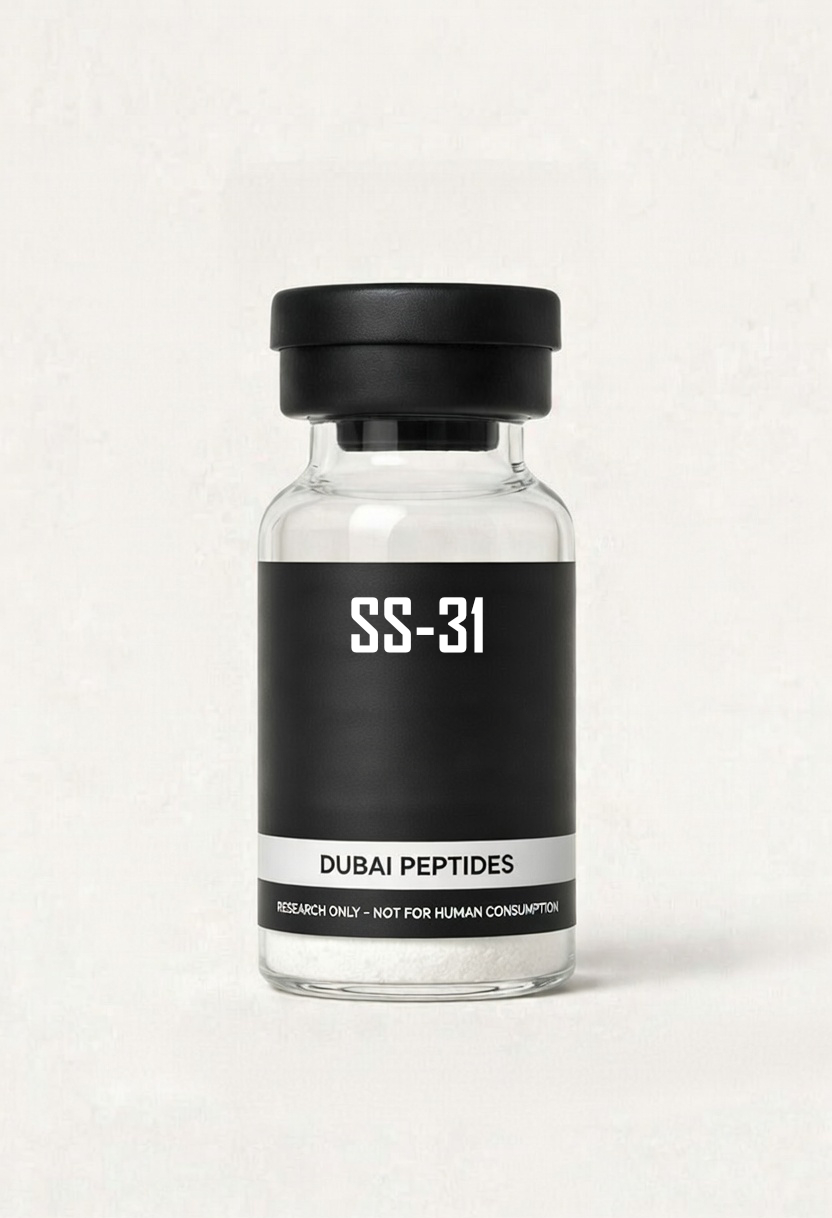
Mitochondria-repair peptide; energy, endurance, neuroprotection, anti-aging at cellular level
SS-31 (also known as Elamipretide, Bendavia, or MTP-131) is a synthetic tetrapeptide designed as a mitochondria-targeted antioxidant from the Szeto-Schiller (SS) series. This research compound selectively accumulates in the inner mitochondrial membrane by binding to cardiolipin, a phospholipid critical for electron transport chain organization. It has garnered extensive scientific interest for its ability to scavenge reactive oxygen species (ROS), stabilize mitochondrial structure, enhance ATP production, and reduce oxidative damage without relying on mitochondrial membrane potential. Researchers employ SS-31 in laboratory and animal models to investigate mitochondrial dysfunction in aging, neurodegeneration, cardiovascular disorders, renal injury, and other conditions linked to bioenergetic failure. As a research-grade compound, SS-31 is intended exclusively for in vitro and animal studies. Scientists value its remarkable cell permeability, high mitochondrial selectivity, and potential to elucidate cardiolipin-mediated mitochondrial protection mechanisms. (Note: Elamipretide has received regulatory approval for specific clinical indications such as Barth syndrome in some jurisdictions, but research formulations remain designated for laboratory use.)
Research Applications
Storage & Handling
Storage & Handling
Lyophilised vials are stable at −20°C for up to 2 years unopened. Once reconstituted, refrigerate at 2–8°C and use within 28 days. Avoid repeated freeze-thaw cycles.
Beyond Use Date
Pre-filled formats (cartridge, pen, nasal) carry a beyond-use date of typically 4–8 weeks from receipt. ≥98% purity by HPLC. For in vitro and preclinical research use only — not for human or veterinary use.
— About this compound
SS-31 is a synthetic mitochondria-targeting tetrapeptide.
SS-31 (also known as Elamipretide, Bendavia, or MTP-131) is a synthetic tetrapeptide designed as a mitochondria-targeted antioxidant from the Szeto-Schiller (SS) series. This research compound selectively accumulates in the inner mitochondrial membrane by binding to cardiolipin, a phospholipid critical for electron transport chain organization. It has garnered extensive scientific interest for its ability to scavenge reactive oxygen species (ROS), stabilize mitochondrial structure, enhance ATP production, and reduce oxidative damage without relying on mitochondrial membrane potential. Researchers employ SS-31 in laboratory and animal models to investigate mitochondrial dysfunction in aging, neurodegeneration, cardiovascular disorders, renal injury, and other conditions linked to bioenergetic failure. As a research-grade compound, SS-31 is intended exclusively for in vitro and animal studies. Scientists value its remarkable cell permeability, high mitochondrial selectivity, and potential to elucidate cardiolipin-mediated mitochondrial protection mechanisms. (Note: Elamipretide has received regulatory approval for specific clinical indications such as Barth syndrome in some jurisdictions, but research formulations remain designated for laboratory use.)

Research Applications
Where researchers apply it.
— Verified & Documented
Every vial is backed by a Certificate of Analysis.
Each lot is independently characterised by HPLC and mass spectrometry, with identity, mass and purity documented per batch and available on request.
Additional quality-control testing, including sterility, endotoxin and heavy metals, is conducted periodically across our product range.
Storage & Handling
Storage & Handling
Lyophilised vials are stable at −20°C for up to 2 years unopened. Once reconstituted, refrigerate at 2–8°C and use within 28 days. Avoid repeated freeze-thaw cycles.
Beyond Use Date
Pre-filled formats (cartridge, pen, nasal) carry a beyond-use date of typically 4–8 weeks from receipt. ≥98% purity by HPLC. For in vitro and preclinical research use only — not for human or veterinary use.